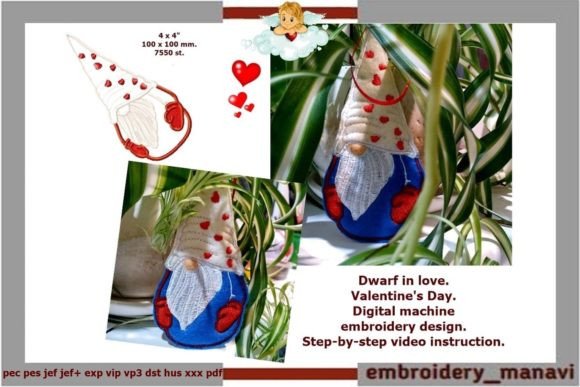
Dwarf Valentine ITH: A Designer’s Review
As an embroidery designer who has spent years digitizing and testing files for small business owners, I approach every new machine embroidery design with a critical eye. It is not just about whether the file runs smoothly; it is about whether the final piece sells. When I first loaded the Dwarf Valentine ITH onto my machine, I was looking for more than just cute aesthetics. I wanted to see if this In-The-Hoop project could hold its own as a premium personalized gift in a crowded market. The result was a delightful surprise that blends whimsical charm with solid construction, making it a standout choice for creators targeting the Valentine S Day season and beyond.
First Impressions: Mood and Charm
The immediate appeal of the Dwarf Valentine ITH lies in its emotional resonance. This is not a generic heart shape; it is a character-driven piece that tells a story. The 3D nature of the dwarf adds a tactile quality that flat embroidery simply cannot match. For buyers, this translates into a sense of luxury and effort. The design feels playful yet romantic, striking a balance that is difficult to achieve. It avoids being overly childish, which makes it versatile enough for adult couples, while remaining sweet enough for nursery decor.
From a technical standpoint, the detail level is impressive. The facial features and accessories are distinct without being so fine that they get lost in the fabric pile. This is crucial for a handmade product intended for gifting. If the details are muddy, the perceived value drops. Here, the crispness of the stitches suggests a high-quality embroidery file that respects the limitations of home embroidery machines while maximizing visual impact.
Versatility Beyond Valentine S Day
While the primary category is obviously Valentine S Day, limiting this design to February 14th would be a mistake for any savvy Etsy seller. I tested the concept of using this dwarf for various occasions. Imagine this as a wedding gift accent on a ring bearer pillow or a quirky addition to a bridal shower favor. The theme of love is universal. For baby product creators, this design could easily transition into a nursery item. A soft, plush version of this dwarf could serve as a comforting companion, provided the safety standards for infant items are met regarding loose threads and embellishments.
Consider the potential for an embroidered towel or a kitchen apron. While In-The-Hoop designs are typically standalone objects, the aesthetic can inspire coordinated collections. You might stitch the dwarf as a keychain or ornament to attach to a larger custom embroidery project, such as a tote bag or a pillow cover. This modularity increases the average order value for your small shop product lines. It allows customers to buy a set: a main item with simple monogramming and a special 3D accent piece featuring the dwarf.
Fabric and Material Considerations
One of the most critical aspects of reviewing a new design is understanding how it interacts with different materials. The Dwarf Valentine ITH relies on structure to maintain its 3D shape. Therefore, fabric choice is paramount. I found that medium-weight cottons and felt blends worked best. These materials provide enough body to support the stuffing and the stitching without collapsing.
However, caution is needed when working with textured fabrics. If you attempt this on a thick, looped towel or a highly textured linen, the small details of the dwarf’s face might get obscured. Similarly, stretchy fabrics like jersey knits, often used for baby clothes, require careful handling. Without proper stabilization, the hoop tension can distort the shape, leading to a lopsided final product. For those attempting blanket embroidery or attaching this to flexible surfaces, I recommend using a cut-away stabilizer rather than tear-away to ensure long-term durability.
Dark fabrics present another challenge. If you are using dark thread colors or stitching on black fabric, ensure your thread colors have sufficient contrast. A lack of contrast can make the design look flat and undefined. Always run a test stitch-out on scrap fabric that matches your final product material. This step is non-negotiable for professional results. Check the stitch density on these scraps. If the fabric puckers, you may need to adjust your tension or use a heavier stabilizer.
Commercial Viability and Customer Trust
For commercial embroidery businesses, the perceived value of a 3D item is significantly higher than a flat design. Customers perceive In-The-Hoop projects as complex and time-consuming, which justifies a higher price point. The Dwarf Valentine ITH enhances giftability because it feels like a complete toy or keepsake rather than just a decoration. This emotional connection drives buyer engagement. When a customer receives a item that has depth and texture, they are more likely to share photos on social media, providing free marketing for your brand.
Trust is built through consistency. Before listing this as a digital embroidery file or selling finished goods, verify the commercial licensing terms. The product description mentions it comes with multiple formats, but always confirm the specific license agreement with the designer. Using a file without proper rights can lead to legal issues that jeopardize your commercial embroidery business. Additionally, ensure you understand the required hoop size. Trying to force a design into a smaller hoop than intended will result in clipped edges and ruined materials.
Practical Tips for Execution
To ensure success with the Dwarf Valentine ITH, follow these practical steps derived from my testing process:
- Test on Scrap Fabric: Never skip this step. Use the same fabric and stabilizer combination you plan to use for the final product.
- Check Thread Contrast: Ensure your thread colors stand out against the fabric, especially for facial features and small details.
- Confirm Hoop Size: Verify that your machine’s hoop accommodates the design dimensions comfortably without hitting clamps.
- Review Stitch Density: Look for areas where stitches might bunch up. Adjust tension if necessary to prevent puckering.
- Use Proper Stabilizer: Choose a stabilizer that supports the weight of the stuffing and the stress of the 3D structure.
- Compare Mockups: Create printable mockups or digital previews to show customers how the item looks on light versus dark fabrics.
- Inspect Small Details: After stitching, check that all small elements, like eyes or buttons, are secure and well-defined.
- Verify Licensing: Confirm you have the right to sell finished products made with this design before launching your listings.
Final Thoughts for Makers
The Dwarf Valentine ITH is a robust addition to any designer’s library. It offers the charm needed for holiday sales while possessing the structural integrity to be a year-round favorite for weddings and birthdays. For the Etsy seller or local crafter, it represents an opportunity to elevate standard gift offerings. By paying attention to fabric selection, stabilization, and presentation, you can transform this digital embroidery file into a best-selling personalized gift. Remember, the magic lies not just in the stitch count, but in the joy the final object brings to the recipient. Treat each stitch with care, and this little dwarf will become a beloved staple in your shop.