Mandala Straight Curve Lines: A Designer’s Review
As an embroidery designer who has spent years digitizing patterns for small businesses, I approach every new machine embroidery design with a critical eye. It is not just about aesthetics; it is about functionality, durability, and brand representation. Recently, I reviewed Mandala Straight Curve Lines, a digital file that promises clean geometry and tested stitch quality. For boutique owners, café managers, and handmade creators, this design offers a unique blend of structural precision and organic flow. In this review, I will evaluate how this pattern performs in real-world commercial applications, from staff uniforms to branded merchandise.
First Impressions: Professionalism Meets Organic Flow
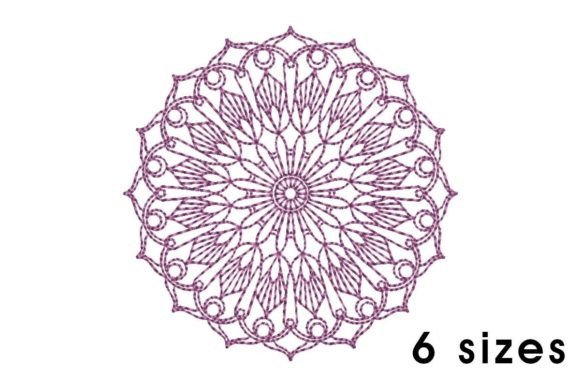
The first thing that strikes me about Mandala Straight Curve Lines is its visual personality. The title suggests a juxtaposition of rigid structure and fluid motion, which is exactly what the design delivers. Unlike traditional mandalas that can sometimes feel overly ornate or busy, this iteration feels modern, elegant, and controlled. It does not scream for attention with chaotic details; instead, it whispers sophistication. For a small business owner, this is crucial. You want your brand identity to feel established and trustworthy, not cluttered.
The lines appear deliberate, suggesting a high level of digitizing care. The description notes that all files are tested prior to release, assuring users of stitch quality. This is a significant relief for professionals who cannot afford machine jams or thread breaks during production runs. The design feels premium, making it suitable for businesses that want to convey a sense of calm, balance, and artistic integrity, such as yoga studios, florists, bakeries, or creative agencies.
Real-World Business Applications
When considering Mandala Straight Curve Lines for small business merch, versatility is key. Here is how I envision this design performing across various product categories:
- Embroidered Patches: This is perhaps the strongest use case. The geometric nature of the straight and curved lines allows for crisp edges when stitched out as a patch. Whether ironed onto denim jackets or sewn onto canvas bags, the design holds its shape well. It serves as an excellent standalone logo accent or a subtle back-patch detail.
- Staff Uniforms and Aprons: For cafés and boutiques, uniform consistency builds customer trust. Placing this mandala on the chest pocket of an apron or the sleeve of a work shirt adds a touch of elegance without overwhelming the garment. It elevates a standard uniform into a branded asset.
- Cap Embroidery: Caps are high-visibility items. However, the curved front panel of a cap can distort complex designs. Because Mandala Straight Curve Lines relies on structured geometry, it can work well on caps if scaled correctly. It provides a modern look that appeals to younger demographics frequenting local coffee shops or retail stores.
- Tote Bag Design: Canvas tote bags are staples for eco-friendly brands and bookstores. The design’s linear elements contrast beautifully against the textured weave of canvas fabric. It creates a sophisticated finished product that customers are proud to carry, effectively turning them into walking advertisements for your brand.
Navigating Technical Challenges
While the design is promising, experienced embroiderers know that beauty lies in the execution. There are specific scenarios where Mandala Straight Curve Lines requires careful handling. The description warns that any alteration on the files may affect the output. This is a critical reminder. Resizing a mandala disproportionately can distort the balance between the straight and curved elements, leading to poor stitch formation.
Stitch density is another factor to consider. Mandala designs often involve overlapping lines. If the density is too high for the chosen fabric, you risk puckering or needle perforation. This is particularly relevant for lightweight fabrics like silk blouses or thin cotton tees. Conversely, on heavy textures like terrycloth towels or thick wool coats, the fine lines might get lost if the thread weight is not adjusted appropriately.
For cap embroidery, the curvature of the bill and the front panel can cause registration issues if the design is too wide. I recommend keeping the design centered and ensuring the hoop size matches the available space on the cap. Additionally, dark uniforms present a challenge for visibility. If you are stitching white thread on black fabric, ensure the spacing between lines is sufficient to prevent the background fabric from showing through excessively, which can make the design look sparse rather than intentional.
Impact on Brand Identity and Customer Perception
Your choice of embroidery directly influences how customers perceive your business. A sloppy or poorly chosen design can detract from your professional image, while a well-executed one enhances brand identity. Mandala Straight Curve Lines contributes to a narrative of precision and care. When a customer receives a tote bag or wears an apron with this design, they subconsciously associate your brand with quality and attention to detail.
For Etsy sellers and craft businesses, this design can serve as a signature element. Consistency in using this motif across different design assets—from packaging tags to social media graphics—creates visual cohesion. It helps in building recognition. Customers begin to associate that specific geometric mandala with your shop, fostering loyalty and repeat business. It transforms a simple item into a collectible piece of branded merchandise.
Practical Designer Notes for Production
Before committing to a large production run, I strongly advise following these practical steps to ensure the best results with Mandala Straight Curve Lines:
- Test in Black and White First: Before selecting your brand colors, stitch the design in black thread on white fabric. This allows you to see the pure structure of the lines and identify any gaps or density issues without the distraction of color.
- Check Small Patch Sizes: Scale the design down to the smallest size you intend to use. Verify that the straight lines remain distinct and do not merge into a blob. If details are lost, the design may be too complex for very small applications.
- Review Thread Color Contrast: Choose thread colors that contrast sufficiently with your fabric. For a subtle, premium look, use tonal variations (e.g., navy thread on black fabric). For high visibility, use complementary colors.
- Inspect Spacing and Hoop Size: Ensure the design fits comfortably within your hoop size with adequate margin for stabilization. Check the spacing between the straight and curved lines to ensure the needle does not strike previous stitches.
- Test on Real Fabric: Digital previews are helpful, but nothing replaces a physical test. Stitch the design on the actual fabric you plan to use for your custom apparel or merchandise. Pay attention to how the fabric texture interacts with the stitches.
- Use Proper Stabilizer: Given the geometric nature of the design, proper stabilization is non-negotiable. Use a cut-away stabilizer for stretchy fabrics and a tear-away for woven materials to maintain the integrity of the straight lines.
- Create a Printable Mockup: Before selling, create a printable mockup or a digital composite to show clients or stakeholders how the design will look on the final product. This manages expectations and aids in approval processes.
- Confirm Commercial Licensing: Always verify the license terms associated with the digital embroidery file. Ensure you have the rights to use the design for commercial purposes, especially if you are selling the finished products.
In conclusion, Mandala Straight Curve Lines is a versatile and professional addition to any embroidery designer’s library. It bridges the gap between artistic expression and commercial viability. By understanding its technical requirements and leveraging its aesthetic strengths, small business owners can create memorable, high-quality merchandise that resonates with their audience. Remember to always run a test stitch, respect the file’s integrity, and let the design elevate your brand’s visual story.